Monday, 5 November 2012

Death Laid an Egg


25th November 2012
Colorama II, Lancaster Street London SE1
Doors open 7PM
Film at 7.30PM

DEATH LAID AN EGG [La morte ha fatto l'uovo]
Giulio Questi - Italy, 1968

This is a deliriously strange thriller about a scientist (Jean-Louis Trintignant) who is breeding headless, boneless chickens at a high-tech farm. He's having an affair with Ewa Aulin, who is plotting with him to kill his wife (Gina Lollobrigida)...and she's plotting with Aulin to kill him...and he and Lollobrigida are plotting...oh, it's too confusing, but extremely memorable. 

The bizarre, only semi-linear editing and trippy cinematographic techniques are artifacts of the psychedelic era and combine with the twisted story to make any Euro-cultist's dreams come true. A film that defies easy categorization, it veers uneasily between giallo, drug film, and science-fiction, with heavy doses of romance and Antonioni-like weirdness. 


It was the time of the economic boom. The process of industrialization was a growing tide that swept everything away. It was a hymn to the future, a frenetic packaging of products without distinction between animate and
inanimate. Products that were still alive were screaming in terror and anguish. Large factory farms were a symbol of this. Every man was a chicken, every hen a woman, every chick a child. Wealth was accumulated on their skin. And, above all, "the egg" triumphed; white, smooth, perfect, with a life locked inside it. Sexual perversion became the only possible way out. 

G. Questi


FRRRRREE, as usual. 

Venue confirmed

Colorama II, Lancaster Street London SE1 
(not the old colorama, but the building next door)
More info watch this space | or the twitter space 
@un_cine | or FB Full Unemployment Cinema


There's an informative post on the film here:  
http://sonofcelluloid.blogspot.co.uk/2012/01/death-laid-egg-1968.html

Extract:

The factory is the real villain of the film - the modern technology implemented by the matriarchal owner Anna has eliminated the need for human workers. The process has become entirely automated and the unemployed workers seethe with undisguised hate and resentment. The factory is coveted by Gabrielle and Mondaini and their thirst for the wealth it is about to generate motivates murder and duplicity. It is also the site for a series of monstrous and grotesque experiments, the culmination of which is the birth of a mutated headless chicken. Its destruction the only sensible thing that the confused and emasculated Marco does. His capitalist overlords however are less than happy with this, their eyes shine with greed at the prospect of a poultry product which will have no waste attached to it. If this isn’t enough the factory even claims the life of a harmless pet dog! The critique of capitalism and aggressive mechanised production techniques emerges as the most salient theme of the film. It feeds into a general sensibility of inhumanity which is reflected in the cynical and selfish behaviour of the main characters.


Friday, 2 November 2012

There's No Whiteness 4 November 7pm

T4 November | 7pm | Free

Upstairs at Freedom Bookshop / Autonomie Club

Angel Alley 84b Whitechapel High Street London E1 7QX

The White Bus (1967)
Directed by Lindsay Anderson, 46 mins)
Written by Shelah Delaney


The Man in the White Suit (1951)
Directed by Alex Mackendrick, 85 mins


The White Bus (1967)
Directed by Lindsay Anderson, 46 mins
Written by Shelah Delaney

Lindsay Anderson and Shelagh Delaney's The White Bus is a surrealistic film about a secretary who takes a strange trip, part of which takes place on the eponymous vehicle. The nameless girl has a seemingly dull life, which is interrupted by periodic flights of fantasy involving suicide, recreations of paintings, and pieces of meat that suddenly run blood-run. Between these fantasies are the details of her real life, especially as she begins a journey home to visit her family. She encounters a wide variety of people -- a teen-ager exceedingly angry that his rubgy team has lost a match, a young man who proposes marriage, a lord mayor who enjoys feeling her leg -- as she travels to locations ranging from a community center and a public library to a natural history museum and a civil defense demonstration. Along the way, the girl maintains a façade of passivity, even when events become quite surreal, as when all of her traveling companions turn into human dummies during the civil defense drill. At the end of the film, she enters a restaurant and eats dinner while the owners pile chairs on the tables around her, obscuring her from view and complaining about the never-ending pace of work. 


The Man in the White Suit (1951)
Directed by Alex Mackendrick, 85 mins

A classic Ealing comedy running fast out of  wartime austerity into a post-war rearrangement of class, capital and technology about combine again in a headlong collision. The films central tension makes for an interestingly prescient take on theories of communisation: "A young scientist invents a material that is indestructible and repels dirt. He soon finds himself caught between the moguls of the textile industry and the trade unions, all equally determined that his invention never sees the light of day." - Screenonline


The Man in the White Suit is a whirling mess: of sabotage and complicity, of things falling apart against the threat of never falling apart.  A desperate, clinging defense - capital and labor, all together now, or we're all fucked! - in the name of decay and forced obsolescence.  A coming together as a nasty collective (headed up by arch-capitalist Sir John Kierlaw, seen above with cane, seen elsewhere haunting the dreams of child labor, a Dark Crystal Skeksis of textile monopoly, his laugh a hissing poisonous exhalation that has to be declared after the fact to have been laughter ) to destroy to protect the order of things that are destroyed, run-down, and cast out "naturally."

Essay by E.C.W. - http://socialismandorbarbarism.blogspot.co.uk/2010/06/its-just-suit-it-looks-as-if-its.html

Tuesday, 23 October 2012

Mouvement Communiste and Unicode WildCat Present:
THE SUSPENDED YEARS 
Movements and Political Journeys in Porto Marghera
Manuela Pellarin, 2009, 49 min. In Italian with English subs.
Sunday 28 October at 7.30 pm. 
Pullens Centre, 184 Crampton street, Elephant and Castle, London SE17 3AE

The film will be preceded with an introduction by the translator into French of a book ('Workers’ Power in Porto Marghera') and an open discussion. 

 The 'Suspended Years' is concerned with the intense series of workers’ struggles which took place in and around the chemical production plants of Porto Marghera (close to Venice) in north eastern Italy, starting in the mid-1960s up until the late 1970s. The Porto Marghera workers became one of the emblematic figures of the whole experience of “workers autonomy” in Italy in this period, alongside the Fiat workers. They were part of a movement which began in the factories but which rapidly spread far beyond the factory walls, to encompass and question the whole of social life under capitalism.
A previous film produced about the Porto Marghera workers by the same director was “The last firebrands” (“Die Jetzten Feuer”) distributed by the German group Wildcat.
The film consists of a series of interviews with participants in these momentous events, including workers in the plants, students from Venice and Padua, and activists involved in such things as “self-reduction” in supermarkets… The interviews were made between 2004 and 2008.

A bit of background
The people interviewed in this film are describing an experience of workers autonomy in Italy between 1968 and 1980, that of the Workers Committee of Montedison in Porto Marghera (1968-1972), which was closely related to that of other workers committees in the region, including those of Chatillon, and AMMI. Starting in  November 1972, these committees transformed themselves into a Workers Assembly, which regrouped many other committees in the Venetia region, but it was the Workers’ Committee of Montedison which remained the real point of reference for all the committees of the province.

The committee was born in a big chemical plant which at the time employed 3000 labourers and 1000 technicians. It was formed from young militant workers in the plant, some of whom had been activists in the union and the CP and others who were completely new to politics. The questions that they asked themselves about their condition in the factory led them to establish contact with people from the group Potere Operaio, who had been handing out their leaflets at the gates of the factory since the winter of 1965-66. Many workers in the plant became involved in Potere Operaio, and some of the interviews in the film are directly concerned with the relationship between the workers inside the plant and the students and intellectuals who have a more “external” relation to workers’ struggles.


All this organisation and agitation began to have a profound impact during 1968. In July of that year there was a strike for better pay and conditions launched by the committee which would become known throughout Italy when, on 1 August, a strikers’ demonstration blockaded the Mestre train station and fought with the police.

Like all expressions of workers autonomy at this time, there were certain demands within workplaces which everybody put forwards - uniform increases of wages, reduction of wage differentials between different categories of workers, equalisation of benefits between workers and white-collar employees, reduction of the pace of work, breaking the division between directly employed and subcontracted workers, etc. And the same methods of struggle were always advocated - organisation into assemblies at the workshop and the factory level, marches through the factory to spread and enforce strikes, the refusal of delegation, etc. But they also intervened outside the factory around various issues – transport (refusing to pay fares), housing (occupations, forcing down rent), reducing electricity bills, and the cost of living in general (against price increases in bakeries and supermarkets).

But the struggles of Porto Marghera also had their own specificities. A particularly important factor was the presence of highly skilled technicians who understood the production process. This was combined with a “workers’ enquiry” that the committee had consciously carried out so as to understand the functioning of the plant and how workers could exploit its weak points. As a result of this, the workers could completely shut down the plant during a strike, even though the bosses had told them it was impossible. Just to make sure that we get the importance of this, a worker explains it twice in the film!

Something else which was specific to Porto Marghera (although not that specific) is the “noxiousness” of their work in the chemical factory (particularly in the vinyl chloride section) and their refusal to accept it, by adopting the principle that “if our working environment  is toxic we’ll try to be there as little as possible” and making the boss pay for the treatment which they had to have.

They went on to critique the consequences of production on the surrounding region and so are perhaps the first “ecologists” to refuse the deadly aspect of capital and to call into question wage labour itself. As the film points out at the end, many worker activists died relatively young as a result of cancers caused by exposure to substances such as vinyl chloride monomer.

The title?
The title – Gli anni sospesi - is taken from the name of a conference which was held in Porto Marghera in 2007 entitled “The 1970s – the suspended years”. But why “suspended”?
Well, perhaps we can say that the period of intense struggle that was the 1970s can be seen as “suspended” in time and space, separate from what came before and after, waiting for something new ahead but not yet in focus or determined… Perhaps.

The film was originally intended to be distributed as a DVD with the book Quando il potere è operaio - Autonomia e soggettività politica a Porto Marghera (1960-1980) [“When power is the worker - Autonomy and political subjectivity in Porto Marghera (1960-1980)"], Rome, Manifestolibri, 2009. The book was recently published in French as Pouvoir ouvrier à Porto Marghera - du Comité d’usine à l’Assemblée de territoire (Vénétie – 1960-80) [“Workers’ Power in Porto Marghera – from the Factory Committee to the Territorial Assembly (Venetia – 1960-80)”], Editions Les Nuits Rouges, 2012.
However, the film stands perfectly well on its own, both as a historical document about the workers’ movement in Italy and as a discussion around the more global themes of the relationship between struggles inside and outside workplaces, between militant workers and “external activists” and even “ecological” questions of shutting down poisonous and environmentally destructive workplaces…

Some useful links:
The classic text “The Refusal of Work”, produced by the Workers’ Committee of Porto Marghera in 1970: http://libcom.org/library/refusal-work-workers-committee-porto-marghera-1970

For those of you who read Italian, here are some editions of the magazine Lavoro Zero (“Zero Work”) that some of the interviewees were involved with: http://www.chicago86.org/archivio-storico/lotte-operaie-anni-60-70/lavoro-zero.html

And why not take a look at the “operaismo” section of libcom?:

Thursday, 11 October 2012

The Old School of Capitalism

Sunday 14th October 7pm Admission Free


The Old School of Capitalism, 2009
written and directed by: Želimir Žilnik
(Serbia, 122 min, DV + HDV)

The Old School of Capitalism is rooted in the first wave of workers revolts to hit Serbia since the advent of capitalism. Desperate workers bulldoze through factory gates and are devastated to discover the site looted by the bosses. Eccentrically escalating confrontations, including a melee with workers in football shoulder-pads and helmets and boss and his security force in bulletproof vests, prove fruitless. Committed young anarchists offer solidarity, take the bosses hostage. A Russian tycoon, a Wall Street trader and US VP Biden’s visit to Belgrade unexpectedly complicate events that lead toward a final shock. Along the way, the film produces an increasingly complex and yet unfailingly lively account of present-day, in fact, up-to-the-minute struggles under the misery-inducing effects of both local and global capital.

plus:
shorts + anti-work discussion

good essay on the film and context by Branka Ćurčic:
http://www.zilnikzelimir.net/paradigm-fragility-workers%E2%80%99-issue-post-socialist-yugoslavia


At
Cuts Cafe
1 Stamford St
Blackfriars
London
SE1 9NT
Email: cutscafe@riseup.net
Phone: 07842 631 370

More info:
http://cutscafelondon.wordpress.com/

Full Unemployment Cinema
http://unemployedcinema.blogspot.com/

Tuesday, 2 October 2012

Full Unemployment Cinema 2012-2013 Programme


28 October – Lindsay Anderson – O Lucky Man / The White Bus Double

25 November – Death Laid an Egg / Questi anime shorts - [Venue TBC]

16 December – Losers & Winners / VW Komplex - [Venue TBC]

27 January – Les Prostitutes de Lyon Parlent / Selma James Housework - [Venue TBC]

24 February – Augusto Tretti, Potere / Ugo Gregoretti, Omicron - [Venue TBC]

31 March – Anthony Friedman Bartleby - [Venue TBC]


Monday, 24 September 2012

Heygate Real Estate Horror Special: Wolfen

Sunday 30 September | 7.30pm | Free

Wolfen, 1981 (1hr 54mins)
Directed by Michael Wadleigh 

At the Heygate Cinema (outdoors) 


The film shows in two parts: 
Part I - 8pm-9pm 
Part II - 9.30pm-10.30pm 

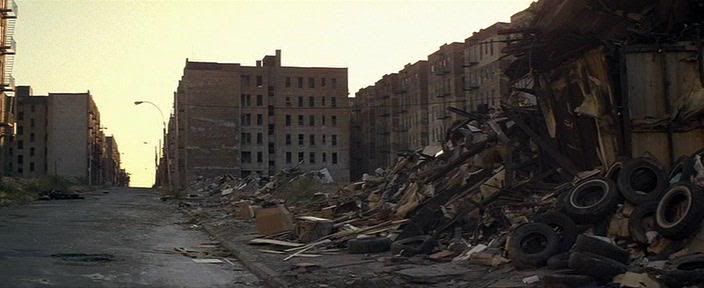
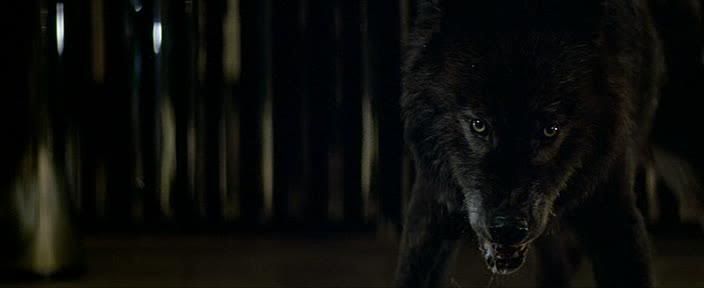
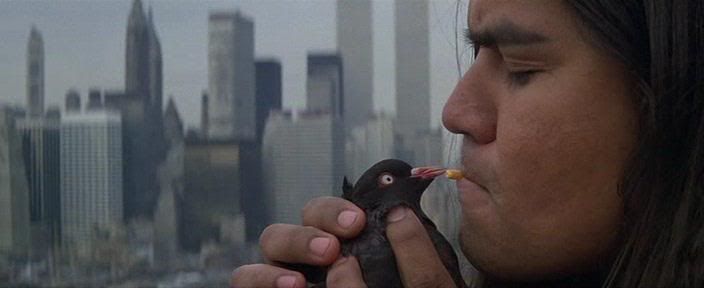
An unusual mix of werewolf movie, police procedural, and serial killer thriller, Wolfen is based on a 1978 novel by Whitley Strieber, and directed by Michael Wadleigh, best known for directing the documentary Woodstock (1969). Entangled in a plot symptomatically torn between political history, capitalist practice and mythologies of the land, Wolfen is an odd and beguiling narrative about a critical moment in the collapse of radical politics and the emergence of a feral neoliberalism against a backdrop of urban dereliction and real estate speculation.

Two excellent essays about the film: http://cartographiesoftheabsolute.wordpress.com/2010/05/14/neoliberalism-as-horror-wolfen-and-the-political-unconscious-of-real-estate/ 
and
http://www.unemployednegativity.com/2009/09/man-is-wolf-to-man-appreciation-of.html


About the Heygate estate: http://southwarknotes.wordpress.com/


Map to the cinema


Thursday, 13 September 2012

This World We Must Leave - Special Double Bill

Thursday the 20th of September | 8pm | Free

Double bill

This World We Must Leave by Jakob Jakobson & Mikkel Bolt

A Man Asleep by Georges Perec & Bernard Queysanne

 Venue: 88 Fleet Street, St Brides Yard. 


Mikkel Bolt and Jakob Jakobson will introduce both films and lead a discussion afterwards.

The title of the film 'This World We Must Leave' is taken from the French left communist Jacques Camatte, who wrote a text in 1973 entitled “Ce monde qu’il faut quitter”, in which he gives an account of how capitalism tends to subjugate not only society and the economy, but also culture, everyday life and the human imagination. Camatte’s critical analysis of the despotism of capital emphasizes the need for a radical transformation of mankind with a view to the development of a non-capitalist life. The short film, This World We Must Leave investigates and represents the desire for another world that is inherent in the rebellious or revolutionary rupture with the prevailing order: the revolutionary event which both articulates criticism of the existing order and presents a new perspective that reflects on how things could be organized in a different way. 

The website has more details on the film and exhibition of which it was a part : http://thisworldwemustleave.dk/eng.html

'Communist revolution is complete revolution. Biological, sexual, social, economic revolutions are no more than partial attributes; the predominance of one is a mutilation of revolution, which can only be by being all.

Communist revolution can be conceived only if it is grasped through the history and paleontology of human beings as well as all other living beings. By grasping this we become aware that, if this revolution has long been necessary, it can now be realized. Earlier it was possible but not unavoidable. There were still other "human" paths in that they still allowed a human development; specifically, they allowed the externalization of human powers. Now almost everything has been externalized and plundered by capital, which describes the only path other than communist revolution: the total negation of human beings. Therefore we must understand our world; we must understand the despotism of capital and the movement of rebellion breaking out against it. This act of understanding which is taking place not only intellectually but also sensually (the rebellion is to a large extent bodily rebellion) can only be reached by rejecting the wandering (of humanity) and repressive consciousness.'

Jacques Camatte, The Wandering of Humanity, (Invariance Année 6, Série II No. 3, 1973. Published in English by Black & Red (Detroit) in 1975).

See: http://www.marxists.org/archive/camatte/index.htm


A Man Asleep 


'You have hardly started living, and yet all is said, all is done. You are only twenty-five, but your path is already mapped out for you. The roles are prepared, and the labels: from the potty of your infancy to the bath-chair of your old age, all the seats are ready and waiting their turn. Your adventures have been so thoroughly described that the most violent revolt would not make anyone turn a hair. Step into the street and knock people’s hat off, smear your head with filth, go bare-foot, publish manifestos, shoot at some passing usurper or other, but it won’t make any difference: in the dormitory of the asylum your bed is already made up, your place is already laid at the table of the poète maudit; Rimbaud’s drunken boat, what a paltry wonder: Abyssinia is a fairground attraction, a package trip. Everything is arranged, everything is prepared in the minutest detail: the surges of emotion, the frosty irony, the heartbreak, the fullness, the exoticism, the great adventure, the despair. You won’t sell your soul to the devil, you won’t go clad in sandals to throw yourself into the crater of Mount Etna, you won’t destroy the seventh wonder of the world. Everything is ready for your death: the bullet that will end your days was cast long ago, the weeping women who will follow your casket have already been appointed.

Why climb to the peak of the highest hills when you would only have to come back down again, and, when you are down, how would you avoid spending the rest of your life telling the story of how you got up there? Why should you keep up the pretense of living? Why should you carry on? Don’t you already know everything that will happen to you? Haven’t you already been all that you were meant to be: the worthy son of your mother and father, the brave little boy scout, the good pupil who could have done better, the childhood friend, the distant cousin, the handsome soldier, the the impoverished young man? Just a little more effort, not even a little more effort, just a few more years, and you will be the middle manager, the esteemed colleague. Good husband, good father, good citizen. War veteran. One by one, you will climb, like a frog, the rungs on the ladder of success. You’ll be able to choose, from an extensive and varied range, the personality that best befits your aspirations, it will be carefully tailored to measure: will you be decorated? cultured? an epicure? a physician of body and soul? an animal lover? will you devote your spare time to massacring, on an out-of-tune piano, innocent sonatas that never did you any harm? Or will you smoke a pipe in your rocking chair, telling yourself that, all in all, life’s been good to you?

No. You prefer to be the missing piece of the puzzle. You’re getting out while the going’s good. You’re not stacking any odds in your favour or putting any eggs in any baskets. You’re putting the cart before the horse, you’re throwing the helve after the hatchet, you’re counting your chickens before they’re hatched and eating the calf in the belly of the cow, you’re drinking your liquid assets, taking French leave, you are leaving and you are not looking back.

You won’t listen to any more sound advice. You won’t ask for any remedies. You will go your own way, you will look to the trees, the water, the stones, the sky, your face, the clouds, the ceiling, the void.'


— Georges Perec, A Man Asleep